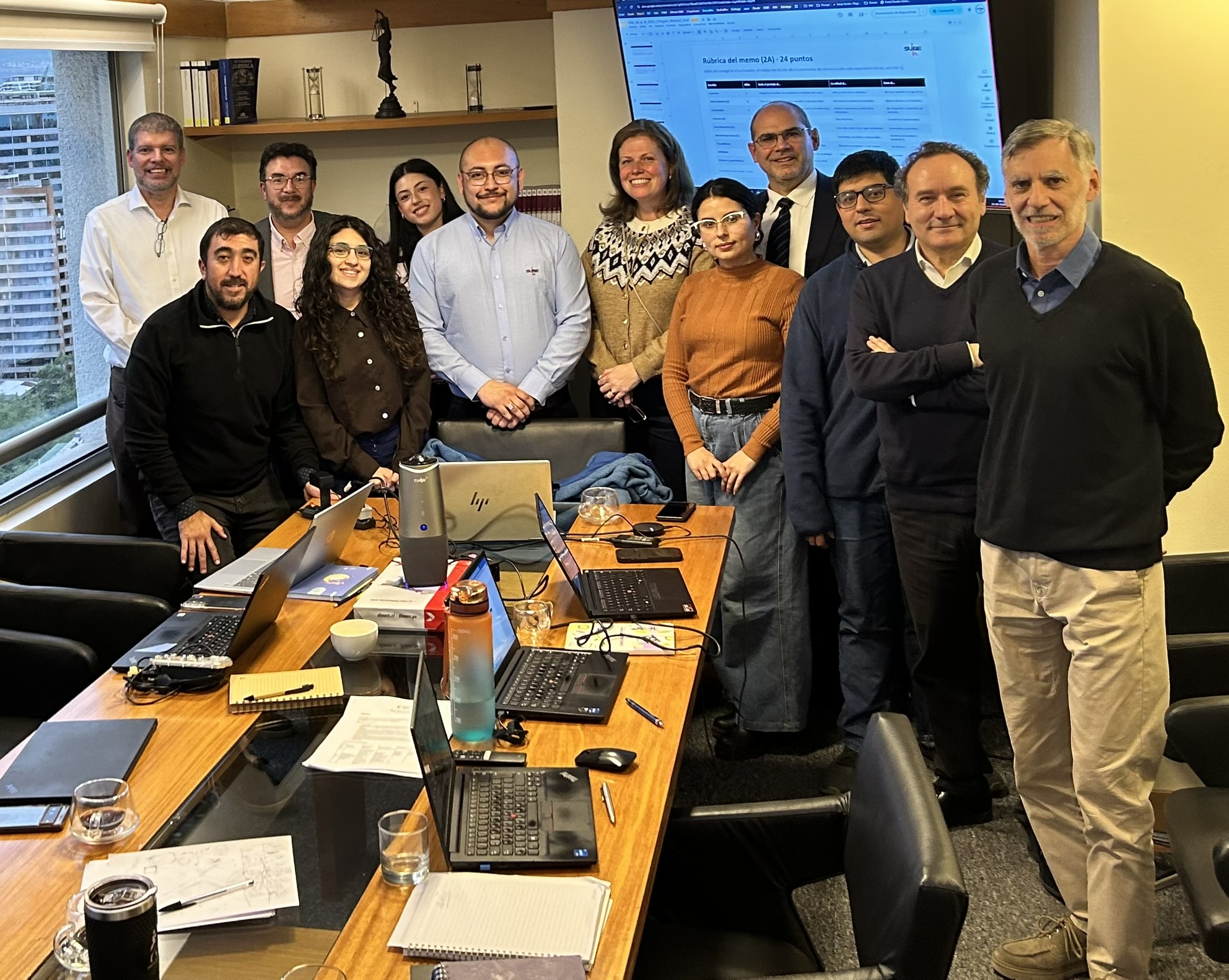
The technological transformation is redefining the way professional services are delivered around the world. Aware of this scenario, Chirgwin has developed over recent years a sustained innovation strategy aimed at understanding, adopting, and applying artificial intelligence in a rigorous, responsible manner aligned with the ethical and professional standards of legal practice.
The most recent initiative within this process is the “Life of AI 2026” program, which marks a new stage in the firm’s technological evolution. Unlike approaches focused exclusively on training or the adoption of tools, the program seeks to develop lasting capabilities within the organization through the creation of working methodologies, verification systems, productivity measurement frameworks, and the exploration of specialized agents to support specific legal tasks.
This effort has not emerged in isolation. Chirgwin formally launched its artificial intelligence training and adoption programs three years ago, fostering a culture of continuous learning that has involved partners, lawyers, and administrative teams. The objective has been to understand the real impact of these technologies on professional practice and to build an approach that prioritizes legal judgment, service quality, and value creation for clients.
The vision that inspires this evolution today has even deeper roots. For nearly a decade, Andrés Chirgwin has promoted the need for the legal profession to prepare for the changes resulting from digitalization, automation, and the advancement of increasingly sophisticated technologies. Long before artificial intelligence became a central topic on public and business agendas, the firm was already reflecting on how these tools would transform the practice of law and the way value is delivered to clients.
For Chirgwin, innovation is an institutional capability rather than merely a technological decision. From this perspective, incorporating artificial intelligence requires the development of new competencies, the refinement of processes, and the strengthening of the organization’s capacity to adapt to the changes taking place in the legal market. Innovation is understood as a tool to enhance the quality of professional work, empower talented individuals, and prepare the firm for the long-term challenges facing the legal profession.
One of the fundamental principles of this process is the responsible use of artificial intelligence, which is regarded as an essential condition for its implementation in the legal field. The firm believes that any technological adoption must be accompanied by control mechanisms, human review, traceability, information protection, and continuous validation of results. Consequently, artificial intelligence does not replace professional judgment or the lawyer’s responsibility; rather, it requires both to be strengthened in order to ensure that technology is used safely, ethically, and reliably.
During the current phase of the program, lawyers and professionals within the firm are working on exercises based on real-world cases, productivity assessments, document verification, and the design of AI-assisted processes. They are also exploring the development of specialized assistants capable of supporting specific legal activities within clearly defined and measurable governance frameworks.
This initiative reaffirms a conviction that has accompanied Chirgwin for many years: the future of the legal profession will require organizations capable of combining legal expertise, innovation, and professional responsibility. In this context, artificial intelligence represents a significant opportunity to strengthen the work of legal teams, provided that its implementation is carried out with the same rigor, prudence, and ethical commitment that the practice of law demands.